
Turquoise is a bright blue-green color that can look fresh, elegant, playful, or sophisticated depending on what you pair with it. If you’re wondering what color compliments turquoise, the answer depends on whether you’re styling turquoise clothes, decorating with turquoise walls, or combining turquoise with another shade such as gray.
The most versatile colors to pair with turquoise include white, gray, navy, black, cream, beige, coral, peach, mustard yellow, and gold. Softer neutrals create a calm look, while warm shades such as coral and orange create stronger contrast.
Below, you’ll find practical turquoise color combinations for clothing, dresses, ladies’ outfits, turquoise blue shades, and interior walls. The goal is to help you choose colors that work together naturally rather than simply matching similar shades.
What Color Compliments Turquoise?
Several colors compliment turquoise particularly well, but the best choice depends on the look you want.
| Color | Effect With Turquoise | Best Use |
| White | Fresh and clean | Clothes, summer outfits, rooms |
| Gray | Balanced and modern | Clothes and interiors |
| Navy | Deep and sophisticated | Dresses, outfits, accessories |
| Black | Bold and dramatic | Evening outfits and accents |
| Cream | Soft and warm | Casual clothing and interiors |
| Beige | Neutral and understated | Everyday outfits and decor |
| Coral | Vibrant and contrasting | Dresses, accessories, summer looks |
| Peach | Soft and feminine | Clothing and decor |
| Mustard Yellow | Warm and energetic | Accessories and accent pieces |
| Gold | Rich and elegant | Jewelry and formal styling |
| Brown | Earthy and grounded | Casual outfits and interiors |
For a safe combination, start with white, gray, cream, beige, or navy. For more contrast, try coral, peach, mustard yellow, or warm orange.
What Colors Go With Turquoise Clothes?

Turquoise clothes work well with both neutral and contrasting colors. The right combination depends on how bright the turquoise is and whether you want your outfit to look casual, polished, bold, or elegant.
White
White is one of the easiest colors to wear with turquoise. It keeps the outfit bright and allows turquoise to remain the main color.
Try a turquoise top with white pants, a turquoise dress with white accessories, or turquoise shorts with a simple white shirt.
Gray
Gray tones down the brightness of turquoise and creates a modern, balanced outfit. Light gray gives a softer appearance, while charcoal gray creates more contrast.
A turquoise blouse with gray trousers is an easy option for a polished everyday look.
Navy Blue
The navy gives turquoise more depth without competing with it. This combination works especially well when you want something more sophisticated than a turquoise-and-white outfit.
You can pair a turquoise shirt with navy pants or use navy shoes or a handbag as a darker accent.
Black
Black creates a strong contrast with turquoise. It works particularly well for evening clothing, formal outfits, and accessories.
A turquoise dress with black shoes and a black bag can create a sharp, defined look without requiring many additional colors.
Cream and Beige
Cream and beige create a softer combination than white. These warm neutrals are useful when you want turquoise to feel less bright or more relaxed.
For example, a turquoise sweater can work well with beige trousers, while a turquoise blouse can be paired with cream-colored pants.
Coral and Peach
Coral sits in a warm color family that creates noticeable contrast with turquoise. The combination feels lively and works particularly well for summer clothing and accessories.
If bright coral feels too strong, peach provides a softer alternative.
What Color Compliments a Turquoise Dress?

The best color for a turquoise dress depends on the occasion and the shade of turquoise.
For a simple and elegant appearance, choose white, cream, nude, beige, or metallic accessories. For stronger contrast, black or navy can work well. Coral and peach are useful when you want a colorful, energetic combination.
Turquoise Dress With White
White accessories create a fresh appearance and are especially suitable for daytime or warm weather outfits.
Turquoise Dress With Gold
Gold can add warmth and richness to turquoise. Gold earrings, bracelets, necklaces, or other small accessories can work particularly well with a dress for a dressier occasion.
Turquoise Dress With Silver
Silver creates a cooler, cleaner combination. It can complement turquoise when you prefer a sleek rather than warm appearance.
Turquoise Dress With Black
Black shoes, a handbag, or a belt can create strong definition around a turquoise dress. Keep the rest of the accessories simple if you want the dress to remain the focal point.
Turquoise Dress With Nude or Beige
Nude and beige are useful when you want the turquoise dress to stand out without adding another strong color. Neutral shoes and accessories can create a clean, understated appearance.
What Colors Go With Turquoise Clothes for Ladies?
Turquoise clothing can be styled with a wide range of colors. The most useful choices are neutrals, deeper blues, warm contrasting shades, and metallic accents.
Some easy combinations include:
- Turquoise + white: Fresh and bright
- Turquoise + cream: Soft and elegant
- Turquoise + beige: Neutral and relaxed
- Turquoise + gray: Modern and balanced
- Turquoise + navy: Deep and sophisticated
- Turquoise + black: Bold and defined
- Turquoise + coral: Colorful and energetic
- Turquoise + peach: Soft and warm
- Turquoise + mustard: Rich and eye catching
- Turquoise + gold: Dressy and luxurious
- Turquoise + brown: Earthy and casual
You don’t need to use several colors in one outfit. A turquoise item paired with one neutral and one small accent color is often enough.
What Colors Go With Turquoise and Gray?
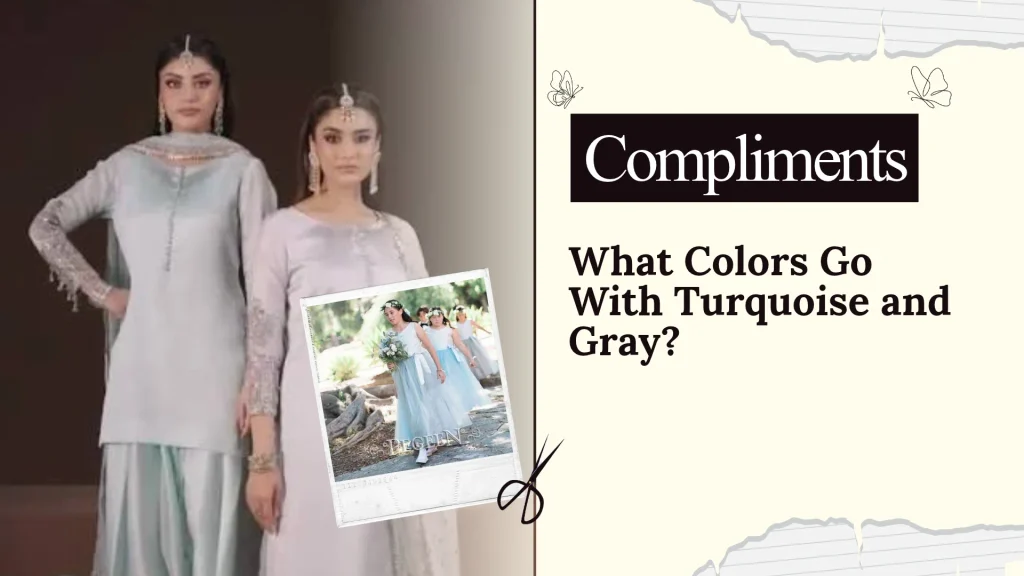
Turquoise and gray are already a balanced pairing, so you can add another color depending on the atmosphere you want.
White keeps the combination crisp and light. The Navy adds depth and creates a more sophisticated palette. Cream or beige warms up the coolness of turquoise and gray. Coral or peach introduces a warmer contrast.
For clothing, turquoise, gray, and white make an easy three-color combination. For interiors, turquoise accents can add energy to a predominantly gray room without making the space feel overly colorful.
Color Combination With Turquoise Green
Turquoise green has more green influence than a strongly blue turquoise, so it can work especially well with natural and warm shades.
Good combinations include:
- Turquoise green + white for a fresh appearance
- Turquoise green + cream for a softer look
- Turquoise green + beige for an earthy palette
- Turquoise green + brown for a grounded combination
- Turquoise green + coral for lively contrast
- Turquoise green + mustard for a warm accent
- Turquoise green + navy for added depth
- Turquoise green + gold for a richer appearance
If the turquoise green is especially bright, neutral colors can help balance it. If the shade is muted, you can introduce a stronger accent without overwhelming the overall combination.
What Color Compliments Turquoise Blue?
Turquoise blue generally works well with both cool neutrals and warm contrasting colors.
White and cream make turquoise blue look lighter and cleaner. Gray and navy create a more restrained combination. Black adds dramatic contrast, while coral, peach, and orange provide warmth.
The intensity of the turquoise blue also matters. A vivid turquoise blue may look better with simple neutrals, while a softer or muted shade can handle stronger supporting colors.
What Color Compliments Turquoise Walls?
Turquoise walls can become a strong focal point, so the best complementary colors often depend on how bright or dark the wall color is.
White
White furniture, trim, curtains, or decorative pieces can make turquoise walls feel bright and clean.
Cream
Cream is warmer than white and can soften the overall appearance of a turquoise room. It works well when you want a comfortable, less stark atmosphere.
Gray
Gray furniture and accessories can balance turquoise walls and create a contemporary appearance. Light gray keeps the room airy, while darker gray adds contrast.
Beige and Tan
Beige and tan introduce warm neutral tones that can prevent turquoise from feeling too cool. They work particularly well with turquoise that has a noticeable green undertone.
Brown and Wood Tones
Natural wood and brown shades can ground turquoise walls. Wooden furniture, baskets, frames, and other natural-looking elements can create a more relaxed palette.
Navy Blue
Navy can add depth to a turquoise room, especially when used in smaller amounts through cushions, artwork, furniture, or other accents.
Coral and Peach
Coral and peach create warm contrast against turquoise walls. Because both colors can be noticeable, they are often better as accent shades rather than covering large areas of the room.
How to Choose the Right Color With Turquoise
The easiest way to choose a turquoise combination is to decide what mood you want first.
For a clean and fresh look: choose white, cream, or light gray.
For a sophisticated look: choose navy, charcoal, black, or gold.
For a soft and relaxed look: choose beige, tan, peach, or muted brown.
For a bright and energetic look: choose coral, orange, or mustard yellow.
For a natural look: choose brown, tan, cream, and muted green.
Also consider the exact turquoise shade. A blue heavy turquoise can work beautifully with other cool shades, while a green heavy turquoise may pair naturally with earthy colors.
Common Mistakes When Pairing Turquoise
Turquoise is versatile, but using too many strong colors at once can make an outfit or room look visually busy.
A few simple guidelines can help:
- Avoid combining turquoise with several competing bright colors unless you intentionally want a bold palette.
- Use neutral shades to give vivid turquoise some visual space.
- Consider the undertone of the turquoise before choosing another color.
- Match the intensity of the colors when possible.
- Use metallics such as gold or silver as accents rather than automatically adding both.
- Remember that lighting can change how turquoise and surrounding colors appear, especially on walls.
A simple turquoise-and-neutral combination is often easier to balance than a palette containing several vivid shades.
FAQ About Colors That Compliment Turquoise
What Is the Best Color to Pair With Turquoise?
There isn’t one universal best color. White, gray, cream, beige, navy, and black are versatile choices, while coral, peach, mustard, and orange provide stronger contrast.
Does Gray Go With Turquoise?
Yes. Gray and turquoise create a balanced combination. Light gray gives a softer appearance, while charcoal gray creates stronger contrast.
Does Turquoise Go With Black?
Yes. Black provides strong contrast with turquoise and can work especially well for dresses, evening outfits, shoes, bags, and other accessories.
What Warm Colors Go With Turquoise?
Coral, peach, orange, mustard yellow, and warm beige can all work with turquoise. These shades create contrast against turquoise’s generally cool blue-green appearance.
What Color Goes With Turquoise Walls?
White, cream, beige, gray, brown, navy, and natural wood tones can all work with turquoise walls. Coral and peach can be added as smaller accent colors when you want more warmth.
Conclusion
Turquoise is easy to coordinate once you decide whether you want a soft, neutral, sophisticated, or contrasting color scheme. White, cream, beige, gray, navy, and black are dependable choices, while coral, peach, mustard, and orange create more noticeable contrast.
For turquoise clothing, consider the occasion and the shade of the garment before choosing accessories or supporting colors. A turquoise dress can look polished with neutral or metallic accents, while casual turquoise clothes can be paired with white, gray, beige, or denim-inspired darker blues.
For turquoise walls, use neutral furniture and accents to balance the color, or introduce warm shades such as coral and peach for contrast. The exact turquoise shade matters, so looking at the colors together in the actual lighting is often the simplest way to make the final choice.

I’m Olivia Mitchell, a writer passionate about compliments, appreciation, and positive communication. I enjoy exploring how thoughtful words can make people feel valued and confident. I create practical content to help readers find sincere compliments for friends, family members, partners, coworkers, and everyday situations.
I’m the author of The Language of Appreciation and A Guide to Meaningful Compliments. Through my writing, I hope to help people express kindness and admiration in simple, genuine ways.